
Everything You Need to Know Before Visiting Pallay Poncho Mountain
Pallayponcho Mountain
- Duration: 1 day
- Difficulty: Moderate to challenging
Maximum altitude: Approximately 4,700 meters above sea level.
Hiking distance: Approximately 5–6 km round trip. Our Peruvian Culture Tours team will pick you up from your hotel at 5:00 a.m. in Cusco. We will travel in a tourist vehicle through beautiful landscapes and communities of the Cusco Andes. Along the way, we will stop briefly in Cusipata for a delicious breakfast. After breakfast, we will continue by vehicle to the village of Occobamba, where we will enter a road and have the opportunity to observe llamas and alpacas as we ascend to the starting point of our hike to Pallayponcho Mountain.
At this point, our official tour guide will give a brief explanation. Our team also carries an emergency oxygen tank. Then we’ll begin a gradual hike, 50 minutes to a maximum of 1 hour, to reach the first viewpoint. The hike will take us through high Andean landscapes, with breathtaking views of mountains, lagoons, and valleys. The ascent is challenging due to the altitude and some steep sections, so we’ll proceed at a comfortable pace until we reach these beautiful viewpoints.
There, we’ll have the opportunity to be with a few other people, allowing us to enjoy incredible views and perfect photo opportunities. At 11:45 am, we’ll begin the descent back to the starting point. We’ll then return by transport to the lunch spot, where we’ll have a delicious lunch at 1:45 pm. After lunch, we’ll continue by transport back to Cusco, arriving around 5:00 or 6:45 pm at your hotel in Cusco. This marks the end of our tour to Pallayponcho Mountain.
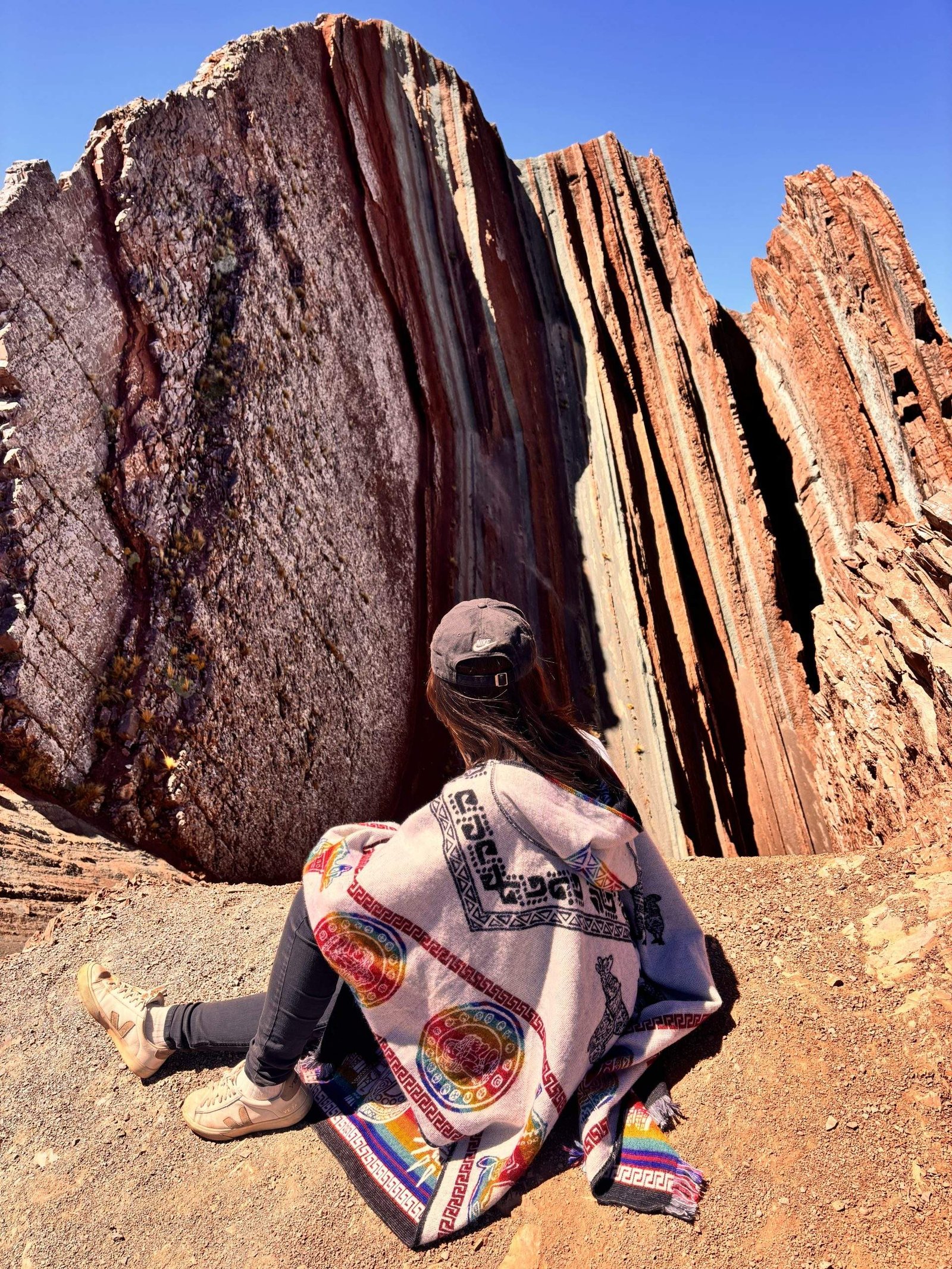
PALLAY PONCHO MOUNTAIN TOP PICTURE
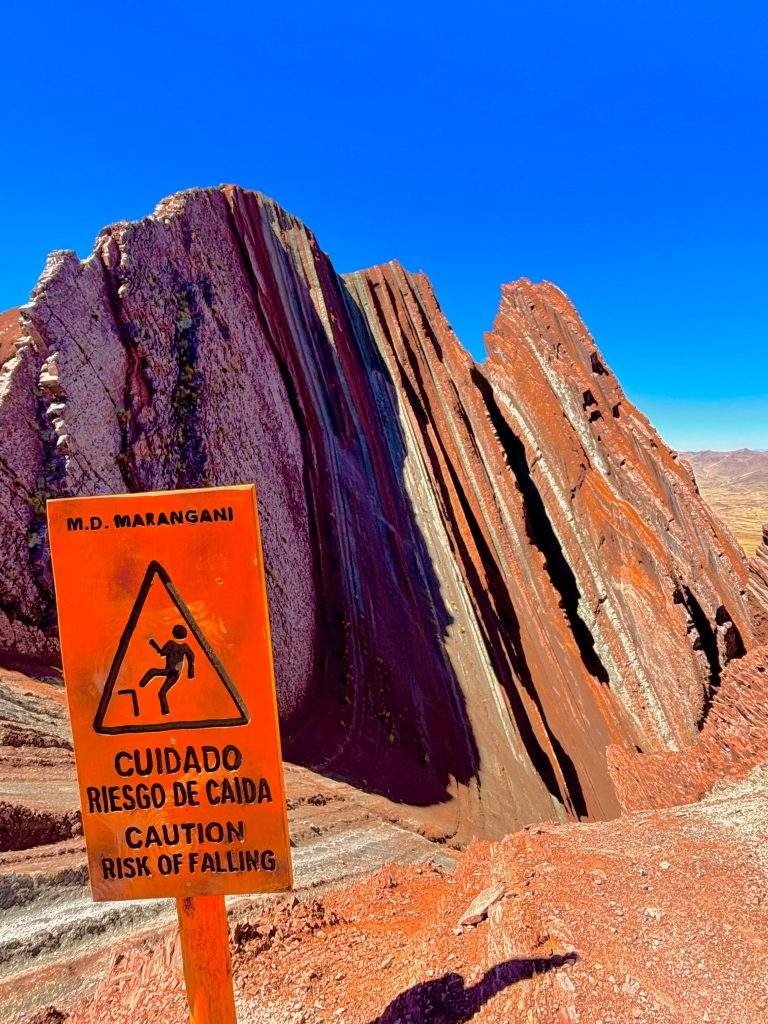
Recommendations for Pallayponcho Mountain
Due to Pallayponcho’s high altitude (4,700 meters above sea level), we recommend spending a few days acclimatizing in Cusco before undertaking the hike. Bring warm clothing, appropriate trekking footwear, sun protection, water, a small backpack, trekking poles, and rain ponchos.
Are there horses in Pallayponcho?
There are no horses in Pallayponcho Mountain because it’s a short walk; that’s why horses aren’t needed.
Where is Pallayponcho located?
Pallayponcho is located in the Cusco region, in the southern Andes of Peru. Leaving Cusco, you will reach the town of Occobamba; there you will find a turnoff that will take you to Pallayponcho Mountain.
How high is Pallayponcho?
The mountain reaches approximately 4,700 meters (15,420 feet) above sea level. Due to this high altitude, it is important to be well acclimatized before hiking.
How long is the Pallay Poncho hike?
The Pallay Poncho hike usualy takes about 1.5–2 hours each way, or roughly 3–4 hours round trip, depending on the route and your own pace.
This the distance of the of the pallay poncho mountain,about 3–5 km each way on the common hiking route and Round trip is 6–10 km
How far is the hike on Pallayponcho mountain?
The hike is approximately 5 to 6 kilometers round trip, although the distance may vary depending on the exact starting point and trail conditions.
Is Pallayponcho difficult?
Pallayponcho is considered a moderate to challenging hike. The main difficulty is the altitude, in addition to some steep sections. You don’t need to be an experienced mountaineer, but you do need to be in good physical condition and properly acclimatized.
Is Pallayponcho more difficult than Rainbow Mountain?
In general, Pallayponcho can feel more challenging than Rainbow Mountain, mainly due to its steep slopes and altitude. However, the difficulty can vary depending on each traveler’s physical condition, acclimatization, and experience.
When is the best time to visit Pallayponcho?
The dry season, generally from May to October, usually offers better conditions for the hike, with a lower probability of rain. Even so, the weather in the Andes can change rapidly.
Why choose Pallayponcho?
Pallayponcho is an excellent option for those who want to discover a spectacular Andean destination off the beaten track. Its colorful mountains, natural landscapes, and Andean cultural environment make this excursion an authentic and unforgettable experience.
What is the difference between these three mountains: Pallay Punchu, Palccoyo, and Vinicunca?
Pallay Punchu, Palccoyo, and Vinicunca are colorful mountains located in the Cusco region and have a geological origin related to layers of minerals that were uplifted and eroded over millions of years. However, they are not located in the same place, and the experience of visiting them is quite different. The recommended Rainbow Mountain, where you will enjoy less crowding, is Pallay Punchu, with several colorful mountains and ridges resembling an Andean poncho. It has moderate access and a more dramatic landscape with very steep ridges and peaks, ideal for those looking for something different and less touristy. It reaches an altitude of 4,700–4,800 meters above sea level. There are no horses or motorcycles for rent on Palccoyo Mountain; only a courier service is required.
the most epic colors of the rainbow Pallay Poncho mountain
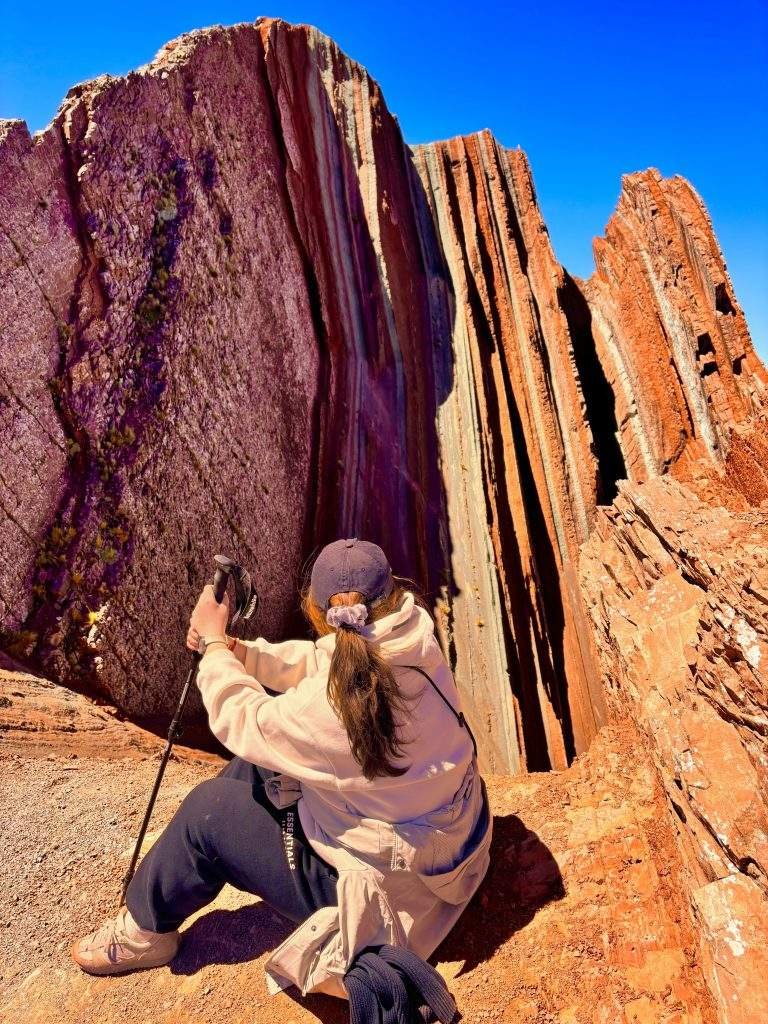
The most epic Pictures in Palcoyo mountain
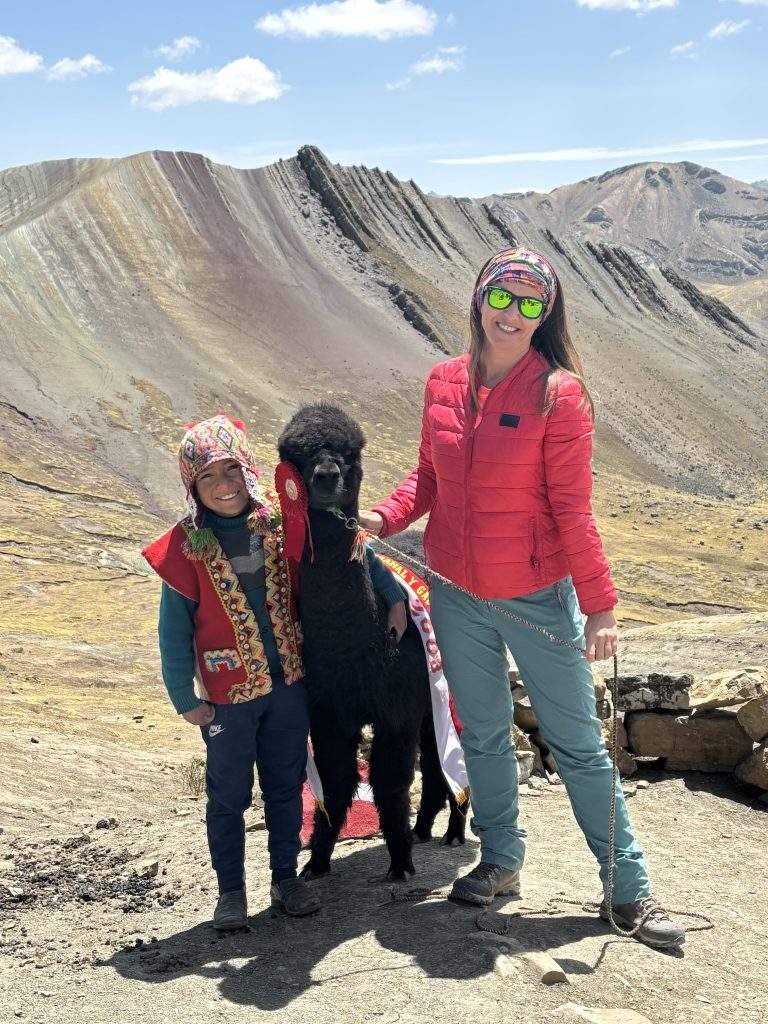
the most epic picture in vinincunca raimbow mountain
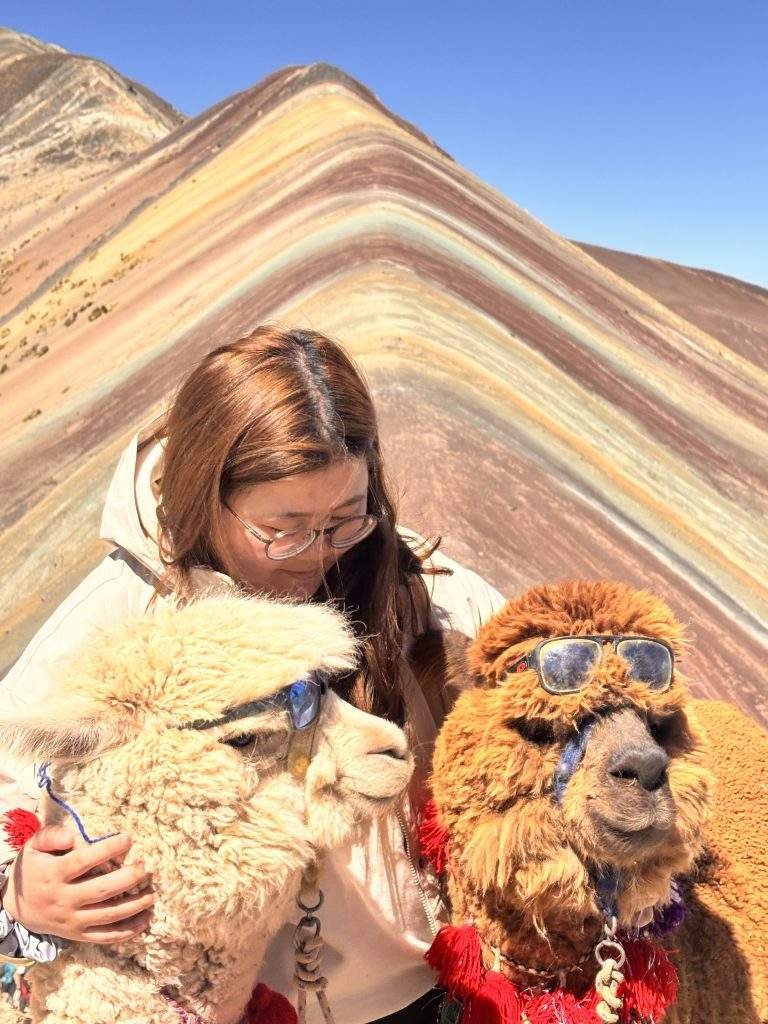
History of Pallay Poncho Mountain and Its Colors
Pallay Poncho, also known in Quechua as Pallay Punchu, is a spectacular multicolored mountain located in the district of Layo, province of Canas, Cusco, at an altitude of approximately 4,700–4,850 meters above sea level. The name Pallay Punchu refers to a “decorated” or “colorful poncho,” inspired by the mountain’s distinctive stripes and shapes, which resemble the traditional woven ponchos of the Andean people.
The history of the mountain
Although Pallay Poncho has only recently become known as a tourist destination, the mountain itself is millions of years old. Its landscape was formed through the accumulation of different sediments and the powerful geological processes associated with the formation of the Andes. Over time, tectonic activity, erosion, weathering, and oxidation exposed the different geological layers that we can see today.
The mountain also has older local names. Official Peruvian tourism information records “Cóndor Sayana,” referring to a place where condors stop or rest. This reflects the close relationship between the mountain landscape and the wildlife and traditions of the surrounding Andean communities.
Pallay Poncho became widely known as a tourist attraction around 2020, when images of its dramatic ridges and colors began circulating during the COVID-19 pandemic. Since then, it has become one of the most interesting alternatives to the better-known Rainbow Mountain destinations of Cusco.
Why does Pallay Poncho have so many colors?
The colors of Pallay Poncho are completely natural. They are not painted onto the mountain. They come from the different types of rocks, sediments, and minerals contained within its geological layers. According to the official tourism inventory, the mountain contains materials including clays, shales, sandstones, quartz-rich rocks, green phyllites, and copper-bearing minerals. Oxidation, erosion, and weathering have helped reveal these layers on the mountain’s surface.
The most noticeable colors include:
- Red and reddish-brown: associated largely with iron-bearing clays and sedimentary rocks.
- Pink and reddish-pink: related to clays, mudstones, and fine sediments.
- Green: associated with green phyllites and minerals containing iron and magnesium; copper-bearing minerals also contribute to green tones.
- White and cream: associated with quartz-rich sandstone and carbonate-bearing rocks.
- Yellow and ochre: associated with weathered sedimentary materials and iron-bearing minerals.
- Purple and brown tones: produced by variations in the mineral composition of the different geological layers.
What makes Pallay Poncho especially impressive is not simply the variety of colors, but the way the geological layers follow the sharp ridges of the mountain. From a distance, these lines resemble the geometric patterns of an Andean textile—almost as if the Pachamama had woven a giant poncho into the mountainside.
For travelers, Pallay Poncho therefore offers more than a beautiful photograph: it is an opportunity to appreciate the geological history, Andean culture, traditional textiles, and natural landscape of southern Cusco in one extraordinary place.
Why does Pallay Poncho have so many colors?